




















Rubio: Iran sanctions relief only for nuclear concessions, not for reopening Hormuz
The secretary of state acknowledged that granting Iran access to additional funds would risk Tehran using the money for malign activity in the region
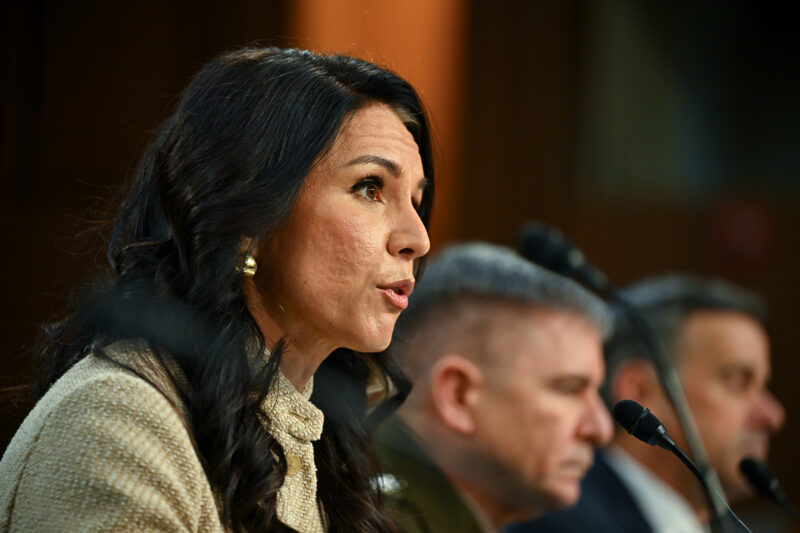
Daniel Heuer/Bloomberg via Getty Images
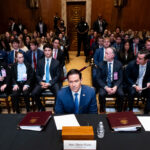
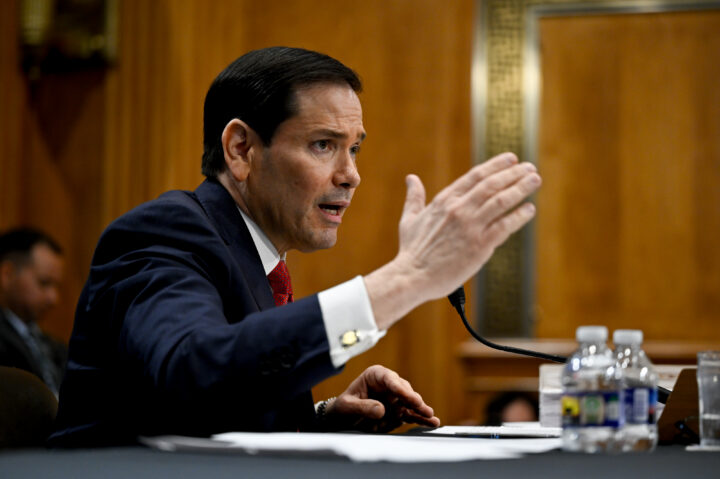
Secretary of State Marco Rubio during a Senate Foreign Relations Committee hearing in Washington, DC, on Tuesday, June 2, 2026.


 Add JewishInsider on Google
Secretary of State Marco Rubio said in testimony to the Senate Foreign Relations Committee on Tuesday that the U.S. is not offering Iran any sanctions relief in exchange for reopening the Strait of Hormuz, and that sanctions relief would only be on the table if the Islamic Republic made concessions related to its nuclear program.
The secretary of state described the diplomatic talks as two-phased: The current phase is focused on getting Iran to agree to reopen the strait and to commit to enter further negotiations on disposing its highly enriched uranium and on “severe and long-term limitations and/or cancelation of enrichment.” In exchange, the U.S. would lift its blockade of Iranian ports.
“For example, they have to commit to say, ‘We will dispose of the enriched uranium.’ And the question now is what are the mechanisms by which we can dispose of it,” Rubio said.
The second phase would entail technical discussions on Iran’s nuclear program and fissile material, in exchange for potential U.S. sanctions relief, and could take months to work through.
“Any sanctions relief is condition-based, which means it has to be in return for the reason why the sanctions are put in place in the first place, which is their nuclear program,” Rubio said. “If they agree to give up [nuclear activities], there will be sanctions relief associated with their commitment and their compliance.”
He said that if Iran complies with U.S. demands including giving up nuclear enrichment and disposing of its enriched uranium, “that’s the place where the frozen assets could be discussed. The more they give, the more they would get.”
But he acknowledged that granting Iran access to additional funds would raise other challenges, including using such funding to support terrorist activities.
Rubio said later during a Tuesday afternoon hearing with the House Appropriations Committee that “if money is going to fund the proxies, it won’t be returned to them,” emphasizing that “there are specific sanctions that are in place related directly to the nuclear program” that could be removed as part of talks.
Republicans cried foul when the Biden administration made similar arguments during its own negotiations with Iran, arguing that any sanctions relief for Iran — even if funds were limited to certain specific humanitarian purposes — would ultimately allow the regime more room in its budget to fund proxy terrorism and other malign activities.
Rep. Lois Frankel (D-FL), who questioned Rubio on the issue, urged him “not to give money to Iran to continue the work of their proxies.”
Sen. Lindsey Graham (R-SC) urged the administration in a Tuesday morning X post to ensure that any deal with Iran forecloses support for terrorism going forward.
“ANY DEAL WITH IRAN MUST CLEARLY STATE THAT IF IRAN PROVIDES FUTURE SUPPORT TO TERRORIST ORGANIZATIONS LIKE HEZBOLLAH, IT WILL RESULT IN CRIPPLING SANCTIONS AND OTHER PUNITIVE MEASURES,” Graham wrote.
Rubio said during the Senate hearing that if Iran refuses to reopen the Strait of Hormuz voluntarily, “then we have other options available to us.”
He added that if the U.S. had refrained from action against Iran because of fears it could close the strait, it would have given Iran effective veto power over U.S. action and acceded to Iran the ability to develop nuclear weapons. “That’s an untenable situation.”
Rubio argued that the U.S. is in the strongest position diplomatically in his memory.
“They have agreed to negotiate aspects of the nuclear program that just a month ago, just a year ago, they were refusing to even mention, much less enter into discussion about,” he said. “That is not a guarantee that it will lead to a deal that is acceptable to the Senate or acceptable to the American people, but we were able to engage them in a process that truly tests the proposition of how far they’re willing to go.”
He insisted that any deal would be stronger than the 2015 Joint Comprehensive Plan of Action agreed to by the Obama administration.
Sen. John Cornyn (R-TX) — who recently lost his primary election to a Trump-backed challenger and may now have more leeway to oppose President Donald Trump’s initiatives for the remainder of his term — suggested he was skeptical of any diplomatic agreement with Iran. Under the Iran Nuclear Agreement Review Act, the administration would be obligated to submit any nuclear deal with Iran for congressional review.
“I do applaud the president’s attempt to try to use some diplomacy here in order to deny them access to the enriched uranium and other weapons that they use against Israel and the West, but tell me, why do you think anything that the Iranian regime agrees to that they will comply with?” Cornyn asked. “What evidence is there that they will agree to anything that they ultimately will stick with?”
Rubio said that any deal will require verifiable steps, and that sanctions relief would come after “they actually do certain things,” not simply in exchange for Iran’s agreement in principle.
He also repeatedly said that issues inside Iran that predate the war, such as the growing economic crisis, have only further accelerated during the war.
He added that diplomatic talks have been slowed by Iran’s internal system and by communications issues inside the country, including divisions between elements of Iran’s government and leadership structure.
The “political class,” Rubio said, would “probably make a deal tomorrow,” but Supreme Leader Mojtaba Khamenei — who was believed to have been injured in the Feb. 28 Israeli strike that killed his father and predecessor, Ayatollah Ali Khamenei — and the Islamic Revolutionary Guard Corps are more insulated from economic and political pressure.
Rubio said that the U.S. has not seen or heard directly from Khamenei, but that there are indications that he is alive and increasingly engaging in governing matters.
Despite urging from Sen. Ted Cruz (R-TX), Rubio said that he is not aware of any U.S. program or plans to arm Iranian protesters against the government.
Rubio also described Operation Epic Fury as “highly successful” in shutting down Iran’s defense industrial base and navy, though he acknowledged that “they still have a lot of drones,” framing that as a challenge that is not unique to Iran.
“There is no Iranian navy. … There’s a bunch of Boston whalers with machine guns on them, but there is no navy,” he said.
Cornyn said that it would be “ludicrous” to suggest that, before the war, Iran’s nuclear program did not pose an imminent threat to the United States. Rubio agreed, adding that if Iran were to develop a nuclear weapon, it “could very well use it,” and even if it did not, having such capability would allow it to hold the world hostage and “hyper-scale” its support for terrorism.
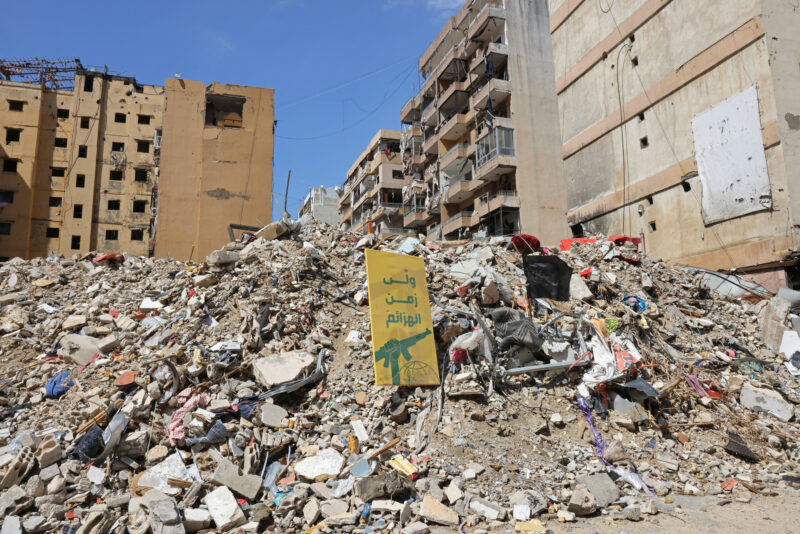
Rubio said that Iran is attempting to drag out the conflict in Lebanon between Israel and Hezbollah by continuing to prop up the terror group. He said the U.S. aims to keep talks over Lebanon separate from negotiations with Iran, while Iran is attempting to merge the two issues.
“The Lebanese government and the Israeli government, they could do a peace deal tomorrow. Israel has no territorial claims in Lebanon, and Hezbollah … has called for the overthrow of the current Lebanese government. The impediment in Lebanon is the fact that Hezbollah has embedded itself in that country and is the reason for all the suffering that’s happening there right now.”
Lebanese and Israeli officials are meeting at the State Department for negotiations on Tuesday.
He said that there are continued difficulties in demilitarizing and defanging Hezbollah, explaining that the Lebanese Armed Forces’ capabilities “are not where they need to be” and that certain elements of the LAF have cooperated with Hezbollah, though he said that there has been progress by the Lebanese government.
Rubio praised the United Arab Emirates as having been “very aggressively cooperative” in the U.S. campaign against Iran and said Kuwait has been “fantastic.” He added that while other U.S. partners have been displeased with Iranian strikes on their energy infrastructure, he called those strikes a “reminder” of the threat they all face from Iran.
Asked about the Board of Peace, Rubio said that the group, which he said is now being structured as an international nongovernmental organization, has just begun to hire staff in the past few weeks. He said the organization aims to remain lean, with just five full-time staff now and a goal of growing to 15 to 20.
He also said that the U.S. has not provided any of the funding it pledged to the Board of Peace and has, for now, walked back the commitment of $50 million that Trump initially offered for the body.
Rubio also flatly denied reports that the U.S. was coordinating with Israel to remove Jordanian custodianship of the Al-Aqsa Mosque complex on the Temple Mount.
More Stories

chant controversy
Zohran Mamdani says ‘globalize the intifada’ is expression of Palestinian rights

NAME AND SHAME
DSA is ‘evil,’ trying to drive Jews out of polite society, D.C. Jewish leader says
FOLLOW THE MONEY
Abdul El-Sayed brings in campaign cash from head of Hamas-cheering group
texas turnaround
Talarico, who now disavows AIPAC, attended group’s event in 2019

Exclusive
L.A. school district recognizes Jewish American Heritage Month after Noa Tishby push

MAKING NEWS
CNBC anchor Sara Eisen confronts antisemitism — on air and online
Please log in if you already have a subscription, or subscribe to access the latest updates.
 Continue with Google
 Continue with Apple